Day in the Life: Athletic Trainer at an Army H2F Facility
Your day as an athletic trainer embedded with an Army brigade starts early, but it is not the pre-dawn grind some might expect. Most H2F athletic trainers work approximately 0730 to 1530, give or take depending on the installation and the unit's training schedule. By mid-morning, you will have assessed movement quality on a physical training field, triaged an acute knee injury, and coordinated care plans with a physical therapist and a strength and conditioning coach.
If you have ever wondered what it actually looks like to practice athletic training inside the Army's Holistic Health and Fitness system, this hour-by-hour walkthrough will give you an honest, detailed picture. This is a day in the life of an H2F athletic trainer.
H2F Athletic Trainer Daily Schedule at a Glance
- 0700–0730: Arrive, review training schedules, prep treatment areas, coordinate with strength coaches
- 0730–0900: Support physical readiness training, triage acute injuries, communicate with unit leadership
- 0900–1200: Conduct musculoskeletal screenings, run rehab sessions, collaborate with PTs, complete documentation
- 1200–1300: Lunch and documentation
- 1300–1500: Deliver injury prevention briefs, support field training events, lead ACFT corrective exercise programming
- 1500–1530: Finalize treatment logs, participate in interdisciplinary team meetings, plan for the next training cycle
What Is the Army H2F System and Where Do Athletic Trainers Fit?
An athletic trainer in an Army H2F facility provides daily injury prevention, acute care triage, musculoskeletal screening, rehabilitation, and return-to-duty programming for an entire brigade of 3,500 to 5,000 soldiers. They work as part of an interdisciplinary performance team alongside strength and conditioning coaches, physical therapists, registered dietitians, occupational therapists, and cognitive performance specialists.
H2F Program Overview and Mission
The Holistic Health and Fitness program is the Army's primary investment in soldier readiness, performance, and injury reduction. Formally established under HQDA EXORD 144-21, H2F represents a fundamental shift in how the Army approaches human performance — moving from a reactive sick-call model to a proactive, integrated system that addresses five domains: physical, nutritional, mental, spiritual, and sleep.
The stakes are significant. A 2020 RAND Corporation study found that musculoskeletal injuries cost the Army more than $3.5 billion annually and remain the leading cause of limited duty and medical separation. H2F exists to change that trajectory, and athletic trainers sit at the center of the effort.
As of 2024, the Army has been scaling H2F to cover all 110-plus Active Duty brigades, creating hundreds of athletic trainer positions across installations in the continental United States and overseas.
The Interdisciplinary Performance Team Structure
Each H2F brigade performance team is designed to include one to two athletic trainers, one to two strength and conditioning coaches, a physical therapist, a registered dietitian, an occupational therapist, and a cognitive performance specialist. This structure intentionally mirrors the integrated sports medicine teams found in professional and collegiate athletics — but the "athlete" population is measured in thousands, not dozens.
The interdisciplinary model means you are never working in a silo. On any given day, you might co-treat a soldier with the physical therapist, design a corrective exercise program informed by the strength coach's periodization plan, or refer a service member to the cognitive performance specialist after recognizing that stress is influencing their movement patterns.
The Athletic Trainer's Unique Role on the H2F Team
Within this team, the athletic trainer often serves as the connective tissue — the provider who is most consistently embedded with soldiers during physical training and tactical events. Your clinical skill set in injury evaluation, rehabilitation, therapeutic modality application, and emergency care makes you the first line of musculoskeletal defense for the brigade.
You are also uniquely positioned to gather population-level data. Because you see soldiers in the field, in the clinic, and during screenings, you develop a comprehensive picture of injury trends that informs the entire team's programming.
Morning Preparation: Getting Ready Before Training Begins (0700–0730)
Reviewing the Day's Training Schedule and Injury Reports
Your day begins shortly before the unit's physical training formation. Arriving at the H2F facility around 0700, the first task is reviewing the day's training schedule. Each battalion within your brigade may have a different plan — one company might be running a five-mile formation run, another conducting combatives, and a third preparing for the Army Combat Fitness Test. Knowing what is on the calendar determines where your skills are most needed and what injury risks to anticipate.
You also review overnight sick-call reports, any messages from unit leadership about soldiers returning from leave with complaints, and follow-up notes from yesterday's rehabilitation sessions.
Setting Up Treatment Areas and Field Kits
Depending on the day, you may be working out of the H2F performance center or heading to a training field. Either way, preparation is non-negotiable. You check your field kit: athletic tape, elastic bandages, splints, ice bags, evaluation tools, and emergency supplies. If the schedule calls for a high-risk training event later — say, a 12-mile ruck march — you pack accordingly, including blister care supplies, a portable treatment table, and hydration monitoring equipment.
Inside the clinic, you ensure treatment tables are clean, modalities are functioning, and your documentation system is accessible.
Coordinating with Strength Coaches on the Day's PRT Plan
A quick check-in with the strength and conditioning coaches — often over coffee in the H2F facility — aligns everyone on the morning's physical readiness training plan. If the coaches programmed heavy deadlift progressions for a particular company, you might plan to observe that session specifically, knowing the movement demands and common compensation patterns. This kind of proactive coordination is one of the hallmarks of the H2F model.
Morning Physical Readiness Training Support (0730–0900)
Observing and Coaching Movement Quality During PRT
Once the unit's physical training begins, soldiers are on the training field, and you are positioned to observe. Physical readiness training is your laboratory. You watch for the movement dysfunctions that textbooks describe and field conditions reveal — the soldier whose squat pattern has deteriorated since last week, the service member compensating through a hip shift during lunges, the new private whose running gait suggests an overuse injury in the making.
This is not passive observation. You actively coach movement quality, cue corrections, and flag soldiers who need a closer look. Your presence on the field also builds trust. When soldiers see you consistently showing up every morning, they are more likely to report minor complaints before those complaints become duty-limiting injuries.
Acute Injury Triage on the Training Field
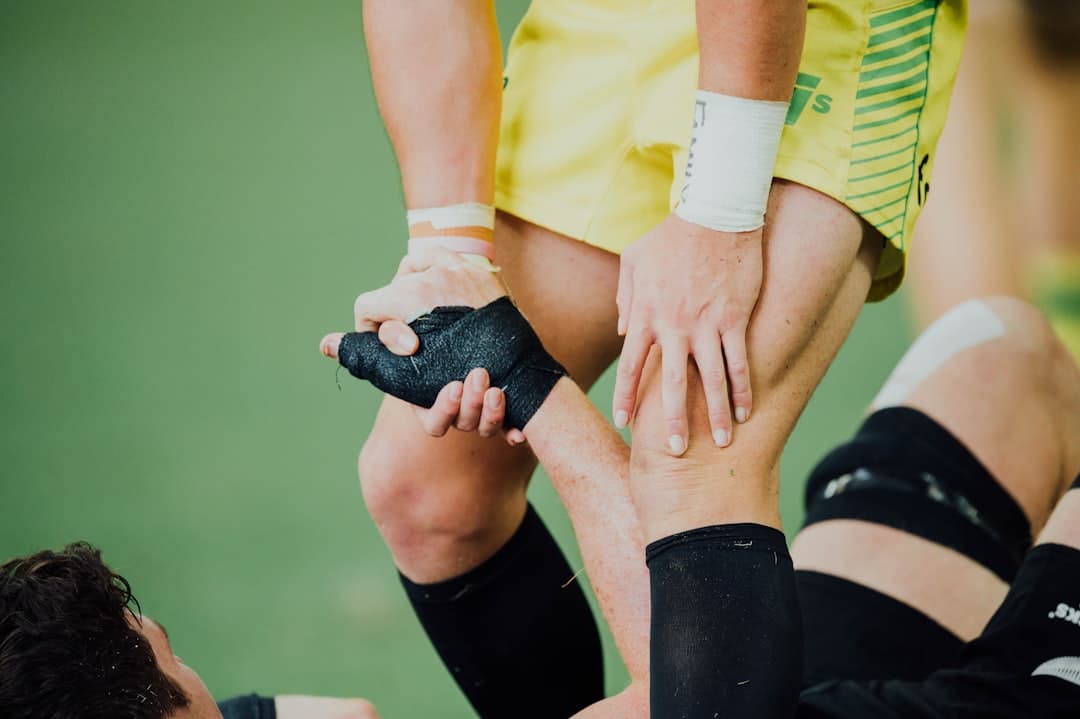
Some mornings, the sideline stays quiet. Others demand immediate clinical decision-making. A soldier rolls an ankle during agility drills. Another reports acute low-back pain after a sprint. A third takes a hard fall during combatives.
In each case, you perform a rapid evaluation, make a triage decision, and determine whether the soldier can continue training with modification, needs to be removed for further assessment, or requires referral to a higher level of care. These decisions carry weight — they affect individual readiness and unit strength.
Real-Time Communication with Unit Leadership
After morning PRT, you typically brief the company commander or first sergeant on any injuries or concerns observed during training. This communication loop is critical. In the H2F model, athletic trainers have a direct line to command, which means your clinical recommendations carry real influence over training modifications, recovery days, and duty status decisions.
Learning to communicate clinical information in clear, concise, military-relevant language is one of the most important skills you will develop in this role.
Ready to Take the Next Step?
Join our team and make a meaningful impact on military readiness while advancing your athletic training career.
Explore H2F positions at Fort Bragg➜Mid-Morning: Clinic Hours, Screenings, and Rehabilitation (0900–1200)
Conducting Musculoskeletal Screenings and Movement Assessments
After the morning training window, the focus shifts to the clinic. Mid-morning hours are often dedicated to musculoskeletal screenings — standardized movement assessments that help identify injury risk before problems manifest. You might screen an entire platoon preparing for a field training exercise or conduct individual assessments for soldiers returning from profile limitations.
These screenings generate data that feeds directly into the H2F team's injury prevention programming. Over time, patterns emerge: a spike in shoulder injuries after a combatives block, recurring ankle sprains in a company that trains on uneven terrain, hamstring strains correlating with inadequate warm-up protocols.
Individualized Rehabilitation and Return-to-Duty Programming
Interspersed with screenings, you manage a caseload of soldiers in various stages of rehabilitation. A return-to-duty protocol in the H2F context is not the same as a return-to-play decision in collegiate sports. The end goal is not a single game — it is sustained operational readiness. That means your rehabilitation programs must account for the demands of rucking, wearing body armor, operating in austere environments, and passing the ACFT.
You track each soldier's progress through measurable benchmarks, adjusting exercise selection and intensity based on their response and their unit's upcoming training requirements.
Collaborating with Physical Therapists and Physicians
The H2F model positions athletic trainers and physical therapists as close collaborators, not competitors. In practice, you might co-manage a soldier's anterior cruciate ligament rehabilitation, with the physical therapist leading early-phase manual therapy and you managing the progressive return-to-duty conditioning. You communicate regularly with brigade medical officers and physician assistants, providing clinical updates and advocating for appropriate duty modifications.
This collaborative dynamic is one of the aspects that athletic trainers in H2F consistently cite as a career highlight. The interdisciplinary respect is built into the system's design.
Using MHS GENESIS and Documentation Systems
Documentation is a non-negotiable part of clinical practice in military healthcare. Athletic trainers in H2F typically document encounters through MHS GENESIS, the Department of Defense's electronic health record system, or through contractor-specific reporting platforms. You log evaluations, treatment interventions, screening results, and referral communications.
Beyond individual encounters, you also maintain population-level injury surveillance data. Command teams rely on this data to make informed training decisions, and your ability to translate clinical findings into actionable reports directly influences brigade health outcomes.
Documentation Tip for H2F Athletic Trainers
Build a consistent daily documentation rhythm. Completing notes between patients during clinic hours prevents the backlog that leads to late evenings at the computer. Many experienced H2F athletic trainers block 10 to 15 minutes after each session specifically for charting.
Afternoon: Education, Prevention Programming, and Field Support (1300–1500)
Injury Prevention Briefs and Soldier Education Sessions
After lunch, the afternoon schedule varies significantly depending on the training cycle. Some days include scheduled injury prevention briefs — presentations to platoons or companies on topics such as proper load carriage mechanics, hydration strategies for field environments, sleep optimization for recovery, or warm-up protocols to reduce ACFT injuries.
These education sessions are where the "holistic" in Holistic Health and Fitness comes alive. Your role extends beyond treating injuries to shaping the knowledge and behavior patterns that prevent them.
Supporting Tactical Training Events: Ruck Marches, Combatives, and More
On other afternoons, you are in the field. H2F athletic trainers commonly support ruck marches, land navigation courses, combatives training, obstacle courses, and live-fire exercises. This embedded field work is one of the most distinctive aspects of the H2F role compared to civilian sports medicine.
You are not in a climate-controlled athletic training room. You are in the elements — heat, cold, dust, mud — providing care in the same environment where soldiers train. Your field kit becomes your clinic. Rapid assessment skills, clinical creativity, and comfort with ambiguity are essential.
ACFT Preparation and Corrective Exercise Programming
The Army Combat Fitness Test has significantly increased demand for athletic trainer expertise. The six-event test — which includes a three-repetition maximum deadlift, standing power throw, hand-release push-ups, sprint-drag-carry, leg tuck or plank, and a two-mile run — places diverse physical demands on soldiers and has introduced new injury patterns.
You design corrective exercise programs based on screening data and ACFT-specific movement analysis. A soldier who struggles with the deadlift may need hip mobility work and motor control training. Another who cannot meet the sprint-drag-carry standard may benefit from a progressive power development program. Your exercise prescriptions complement the strength coach's training plan, creating a seamless continuum from rehabilitation to performance.
End of Day: Documentation, Data Tracking, and Team Meetings (1500–1530)
Completing Daily Treatment Logs and Population Health Reports
The final portion of the day is devoted to closing the loop. You complete any remaining treatment notes, update rehabilitation progress logs, and compile the day's injury data into population health reports. These reports may be shared weekly or monthly with brigade command, and they form the evidentiary basis for training modifications and resource allocation.
Interdisciplinary Team Huddles and Case Reviews
Most H2F teams hold a brief end-of-day or weekly huddle. The athletic trainer, strength coach, physical therapist, dietitian, and cognitive performance specialist review complex cases, discuss emerging injury trends, and align on programming adjustments. These team meetings are where the interdisciplinary model delivers its greatest value — each provider contributes a distinct perspective, and the soldier benefits from a coordinated plan rather than fragmented care.
Planning for Tomorrow's Training Cycle
Before heading out, you review tomorrow's training schedule and identify any soldiers who need follow-up, any training events that require field coverage, and any screenings or education sessions on the calendar. The cycle begins again.
By 1530, your day is typically done. You have spent a full eight-hour shift embedded in a system that touches thousands of soldiers, and the work carries a sense of purpose that is difficult to replicate in many civilian settings.
Ready to Take the Next Step?
Join our team and make a meaningful impact on military readiness while advancing your athletic training career.
Explore H2F positions at Fort Hood➜What Makes the H2F Athletic Trainer Role Different from Civilian Sports Medicine?
Mission-Driven Care vs. Win-Loss Outcomes
In collegiate or professional sports, the athletic trainer's work is ultimately measured against competitive outcomes — wins, losses, championships. In H2F, the metric is readiness. Your care directly supports the ability of service members to deploy, complete their missions, and return home safely. That mission-driven framework gives clinical decisions a gravity that many athletic trainers find deeply motivating.
Working Within Military Culture and Rank Structure
As a civilian embedded in a military environment, you will navigate rank structures, military customs, and a communication style that may be unfamiliar at first. Soldiers address their superiors differently than athletes address coaches. Command decisions can override clinical recommendations in ways that do not occur in civilian sports medicine. Learning to advocate for your patients within this structure — respectfully, clearly, and with data — is a skill that grows over time.
Embedded Field Work vs. Traditional Clinic Settings
While civilian athletic trainers certainly work on sidelines, the H2F role takes field work to another level. You may spend an afternoon in a wooded land navigation course, a morning on a live-fire range, or a full day supporting a 20-kilometer ruck march. The environments are unpredictable, and your clinical decision-making must adapt accordingly.
Population Health Responsibility for Thousands of Soldiers
Perhaps the most significant difference is scale. A collegiate athletic trainer may manage a roster of 30 to 120 athletes. An H2F athletic trainer shares responsibility for a brigade of 3,500 to 5,000 soldiers. This population-level responsibility requires systems thinking — you are not just treating individuals but shaping the health outcomes of an entire community.
Work-Life Balance, Benefits, and Career Growth in H2F
Typical Work Hours and Schedule Flexibility
Most H2F athletic trainers work approximately eight-hour days, typically from 0730 to 1530, give or take depending on the installation and unit schedule. Some field training events or exercise support may extend hours or require occasional weekend coverage. However, the predictability of the military training schedule generally allows for better advance planning than many civilian sports medicine roles, which often involve evening games and weekend tournaments.
Contractor vs. GS Employment: Pay, Benefits, and Stability
The majority of H2F athletic trainer positions are filled through government contractors such as Planned Systems International (PSI). Contractor salaries typically range from $55,000 to $80,000 annually depending on location, experience, and contracting company. Some positions may be classified under the General Schedule (GS) pay system, which provides federal benefits including the Federal Employees Health Benefits Program, Thrift Savings Plan, and pension eligibility.
Contractor positions often offer health insurance, paid time off, and relocation assistance, though benefits vary by employer. Understanding the differences between contractor and GS employment structures is an important part of evaluating H2F opportunities.
Career Advancement Opportunities Within H2F and Military Healthcare
Within the H2F system, experienced athletic trainers can advance into lead or senior athletic trainer roles, program coordinator positions, or regional oversight responsibilities. The skills and experience gained in H2F — interdisciplinary collaboration, population health management, data-driven programming — also transfer well to other military healthcare settings, federal agencies, and civilian performance optimization roles.
Relocation Considerations and Installation Life
H2F positions are located at Army installations across the country and overseas. Depending on your contract, you may have the opportunity to work at installations in locations ranging from Fort Bragg in North Carolina to Joint Base Lewis-McChord in Washington to installations in Germany, Italy, or South Korea. Each installation offers a different quality of life, cost of living, and community experience. Researching installation-specific factors before accepting a position is a worthwhile investment.
PSI connects certified athletic trainers with meaningful careers in military healthcare, including H2F performance team positions at installations nationwide. With deep expertise in government contract healthcare staffing, PSI understands the unique qualifications, credentialing requirements, and career aspirations that define success in H2F roles.
How to Land an Athletic Trainer Position in an H2F Facility
Required Credentials and Qualifications
To qualify for an H2F athletic trainer position, you must hold current Board of Certification (BOC) certification and a valid state license (where applicable). Most positions require a master's degree in athletic training or a related field. Additional certifications in corrective exercise, performance enhancement, or manual therapy can strengthen your candidacy. A background in working with tactical or military populations is valued but not always required.
Top Contracting Companies Hiring H2F Athletic Trainers
Planned Systems International (PSI) is one of the primary government contracting companies that staffs H2F performance teams at Army installations across the country. PSI manages the hiring process, benefits package, and employment terms, and its recruiting team specializes in matching athletic trainers with positions that align with their clinical expertise and career goals.
Tips for Tailoring Your Resume for Military Contract Roles
Government contract positions often require specific resume formatting and keyword alignment. Highlight your experience with musculoskeletal screening, injury prevention programming, interdisciplinary collaboration, and population-level health management. If you have experience with electronic health records — particularly MHS GENESIS — include it prominently. Quantify your impact where possible: number of athletes managed, injury reduction percentages, screening volumes.
Resume Tip: Use language that mirrors the H2F performance team structure. Instead of "worked with football team," describe your experience as "provided injury prevention, acute care, and rehabilitation services for a population of [X] athletes within a multidisciplinary sports medicine team." This framing resonates with H2F hiring managers.
How PSI Can Help You Find Your H2F Opportunity
Navigating the government contract hiring landscape can be complex. PSI specializes in matching certified athletic trainers with H2F and military healthcare positions that align with their clinical expertise, career goals, and lifestyle preferences. From identifying open positions to guiding you through credentialing and onboarding, PSI serves as a knowledgeable partner throughout the process.
Explore current H2F athletic trainer job openings or connect with PSI's team to discuss your career path in military healthcare.
Frequently Asked Questions
Ready to Take the Next Step?
Join our team and make a meaningful impact on military readiness while advancing your athletic training career.
Explore H2F positions at Multiple Installations➜Ready to Serve? Start Your Military Healthcare Career
Join our team and make a difference serving in Army H2F and Marine Corps SMIP programs across the United States.
Apply Now➜