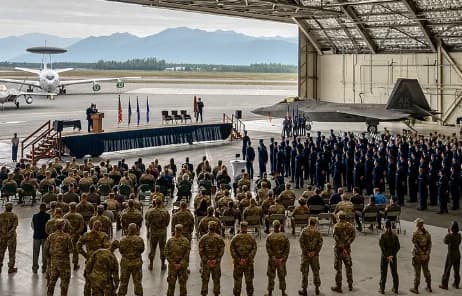
Joint Base Elmendorf-Richardson sits at the edge of Anchorage, backed by the Chugach Mountains and surrounded by some of the most demanding training terrain in the Department of Defense inventory. For a certified athletic trainer considering a contract position in Alaska, JBER offers a clinical environment unlike any other military installation in the United States — one defined by Arctic operations, airborne training, and a patient population that pushes the boundaries of human performance in extreme cold.
What is it like working as an athletic trainer at JBER? Athletic trainers at Joint Base Elmendorf-Richardson provide embedded musculoskeletal care to Army and Air Force service members who train in Arctic conditions as severe as -40°F. The role blends traditional sports medicine with operational readiness support, cold weather injury prevention, and collaboration with military medical teams — all within one of the largest and most strategically important installations in the U.S. defense network.
This guide covers everything you need to evaluate a position at JBER: the installation itself, your scope of practice, Alaska licensure requirements, compensation and cost of living, daily life in Anchorage, and the application process through government contracting companies like PSI.
Overview of Joint Base Elmendorf-Richardson (JBER)
History and Formation of JBER: Merging Two Iconic Bases
JBER was established in 2010 through the consolidation of two storied installations — Elmendorf Air Force Base and Fort Richardson — under the Base Realignment and Closure (BRAC) process. Elmendorf had served as a cornerstone of Pacific air defense since World War II, while Fort Richardson had anchored Army operations in Alaska since 1940. The merger created a single joint installation that now hosts approximately 13,000 active-duty military personnel from both the Army and Air Force.
For athletic trainers, the joint nature of JBER means exposure to two distinct service cultures, two sets of physical readiness standards, and two populations with different operational demands — a breadth of clinical experience that few single-service installations can match.
JBER's Strategic Military Importance in the Arctic
Alaska is the only U.S. state within the Arctic region, and JBER serves as the primary staging ground for American power projection into the Arctic and across the Pacific. As geopolitical competition in the High North has intensified, so has the operational tempo at JBER. Service members stationed here conduct cold weather training exercises, Arctic survival courses, and joint multinational drills that test the limits of equipment and human physiology alike.
This strategic posture translates directly into clinical demand. More demanding training environments generate more complex injury profiles, and the need for embedded athletic trainers who understand cold-related musculoskeletal pathology has never been greater.
Key Units Stationed at JBER: 11th Airborne Division and 673d Air Base Wing
Two major commands define the athletic training workload at JBER:
-
The 11th Airborne Division (Arctic Angels): Reactivated in June 2022, this is the Army's only division specifically focused on Arctic warfare. Its soldiers conduct airborne operations, cold weather maneuvers, and high-altitude mountain training. The reactivation significantly increased the demand for embedded musculoskeletal and sports medicine support on the Army side of JBER.
-
The 673d Air Base Wing: The host unit for the Air Force side of the installation, responsible for installation management and support of flying and expeditionary operations. Air Force personnel have their own physical fitness requirements and occupational injury patterns, particularly among aircraft maintainers and security forces.
Additional tenant units, special operations elements, and joint task forces rotate through JBER regularly, adding to the diversity of your patient population.
Base Layout, Size, and Key Facilities
JBER spans approximately 73,000 acres, making it one of the largest military installations in the country. The base is effectively divided into two main areas: the Elmendorf side (Air Force) to the northwest and the Richardson side (Army) to the southeast, connected by internal road networks.
Key facilities relevant to athletic trainers include:
- Bassett Army Community Hospital — the primary military healthcare facility on the installation
- Buckner Physical Fitness Center — a major Army fitness facility
- Elmendorf Fitness Center — the primary Air Force fitness facility
- Multiple unit-level gyms and outdoor training areas — including rucking trails, obstacle courses, and ranges
- Commissary, Exchange (BX/PX), and MWR facilities — supporting daily life on base
The installation's size means you may be assigned to a specific unit area or fitness center, and travel between facilities during the workday is common.
The Role of an Athletic Trainer at JBER
Daily Responsibilities and Scope of Practice
As a contract athletic trainer at JBER, your clinical day typically revolves around direct patient care for active-duty service members. Core responsibilities include:
- Conducting musculoskeletal evaluations and assessments
- Developing and implementing individualized rehabilitation programs
- Providing injury prevention education and movement screening
- Performing therapeutic interventions including manual therapy, therapeutic exercise, and modality application
- Documenting patient encounters in military electronic health record systems (typically AHLTA or MHS Genesis)
- Coordinating referrals with physicians, physical therapists, orthopedic surgeons, and other providers
Your work is embedded — meaning you are physically located with the units you support rather than in a traditional clinic. This proximity to service members allows for earlier intervention, better continuity of care, and a deeper understanding of the physical demands your patients face.
Supporting the H2F Program and Operational Readiness
The Army's Holistic Health and Fitness (H2F) program has been a driving force behind the expansion of athletic trainer positions at installations like JBER. H2F embeds multidisciplinary performance teams — including athletic trainers, strength and conditioning coaches, physical therapists, dietitians, and cognitive performance specialists — directly within brigade-level units.
At JBER, the H2F program is particularly critical given the physical demands of Arctic operations. Athletic trainers within H2F teams at JBER contribute to:
- Pre-deployment physical readiness assessments
- Return-to-duty protocols following injury
- Unit-level injury surveillance and data analysis
- Integration of injury prevention strategies into unit physical training plans
- Coordination with battalion and brigade leadership on readiness metrics
PSI partners with the Department of Defense to place qualified athletic trainers in H2F and sports medicine roles at installations across the country, including JBER. Every position supports a broader mission: keeping service members healthy, ready, and able to accomplish their operational objectives.
Unique Injury Profiles: Cold Weather, Airborne Operations, and Arctic Training
The clinical caseload at JBER differs meaningfully from what you would encounter at a temperate-climate installation. Expect to manage:
- Cold weather injuries: Frostbite, non-freezing cold injuries (trench foot), and cold-induced musculoskeletal stiffness are seasonal realities. Understanding cold exposure physiology and tissue response is essential.
- Airborne and air assault injuries: The 11th Airborne Division conducts regular parachute operations. Lower extremity injuries from parachute landing falls — including ankle sprains, knee ligament injuries, and lumbar compression — are common.
- Load carriage injuries: Arctic operations demand heavy rucksack loads combined with movement over uneven, snow-covered terrain. Overuse injuries of the lower extremity and lumbar spine are prevalent.
- Overtraining and environmental stress: Extreme cold increases caloric expenditure and places additional stress on the musculoskeletal and cardiovascular systems, creating recovery challenges that athletic trainers must account for in treatment planning.
This is a clinical environment that rewards adaptability, strong assessment skills, and a willingness to learn from the conditions around you.
Working with Army and Air Force Personnel on a Joint Installation
JBER's joint nature means you may support both Army and Air Force populations, depending on your contract assignment. While the fundamental clinical skills are the same, there are practical differences worth understanding:
- Fitness standards differ between branches. The Army Combat Fitness Test (ACFT) and the Air Force physical fitness assessment have different events, scoring, and injury implications.
- Operational cultures vary. Army units at JBER tend toward field training and ground operations; Air Force units focus on flight operations, aircraft maintenance, and expeditionary support.
- Chain of command and documentation systems may differ. Familiarity with both cultures improves your credibility and effectiveness.
This dual-service exposure is professionally enriching and can broaden your career trajectory within military sports medicine.
Collaboration with Military Medical Teams at Bassett Army Community Hospital
Bassett Army Community Hospital is the primary medical treatment facility at JBER and serves as the referral hub for orthopedic, primary care, and rehabilitation services. As an embedded athletic trainer, you will coordinate closely with:
- Physical therapists and occupational therapists
- Orthopedic surgeons and sports medicine physicians
- Primary care managers and physician assistants
- Behavioral health professionals (particularly relevant given seasonal daylight impacts)
Strong interprofessional communication is expected. Your role as the first point of musculoskeletal contact for many service members means your evaluations, documentation, and referral decisions carry real clinical weight.
Ready to Take the Next Step?
Join our team and make a meaningful impact on military readiness while advancing your athletic training career.
Explore H2F positions at JBER➜Licensing and Credentialing Requirements for Alaska
Alaska State Athletic Training Licensure (AS 08.07)
Alaska requires athletic trainers to hold a state license issued by the Department of Commerce, Community, and Economic Development under Alaska Statute 08.07. Key requirements include:
- Graduation from a CAATE-accredited athletic training program
- Current BOC (Board of Certification) certification
- Submission of a completed application, fees, and official transcripts
- Passing a criminal background check
- Verification of licensure from any other state where you have held a license
Alaska does not have a temporary or provisional license category, so begin the application process as early as possible.
BOC Certification and Continuing Education Requirements
Maintaining your BOC certification is a baseline requirement for any contract athletic trainer position at JBER. You must:
- Hold current, unrestricted BOC certification
- Complete continuing education requirements per BOC reporting periods (currently 50 CEUs per two-year cycle)
- Maintain current CPR/AED certification from an approved provider
Alaska's state CE requirements align closely with BOC standards, but verify the specifics with the state licensing board to ensure compliance with both.
Federal Contractor Credentialing and Privileging Process
Working at a military installation as a government contractor involves an additional credentialing layer beyond state licensure. This process typically includes:
- National Agency Check with Inquiries (NACI) or equivalent background investigation — required for base access and Common Access Card (CAC) issuance
- Verification of credentials — licensure, certification, education, and work history verified through the contracting company and the military treatment facility
- Privileging by the installation's credentialing committee — your scope of practice on the installation is formally defined and approved
- Completion of required training — including HIPAA, cybersecurity awareness, and installation-specific orientations
The PSI hiring process moves quickly — from application to offer typically takes just one to two weeks, and onboarding can begin within two to four weeks of a signed offer while the government background investigation runs concurrently. To avoid delays, have your Alaska license application in progress and all supporting documentation — transcripts, BOC verification, CPR certification — organized and ready to submit from day one.
Tips for Expediting Your Alaska License Application
- Submit your application to the Alaska board well in advance of your anticipated start date — processing times vary, but allowing 6 to 8 weeks is prudent.
- Request official transcripts and BOC verification letters early; these are common bottleneck items.
- Contact the Alaska Division of Corporations, Business and Professional Licensing directly if you have questions about requirements or application status.
- If you hold licenses in other states, have verification letters prepared in advance.
Requirements for athletic trainers at JBER Alaska:
- Current BOC certification
- Alaska state athletic training license (AS 08.07)
- Graduation from a CAATE-accredited program
- Current CPR/AED certification
- Eligibility for a federal background investigation (candidates can begin work while the investigation is in process)
- Privileging approval from the installation credentialing authority
- Compliance with all continuing education requirements (BOC and Alaska state)
Compensation, Benefits, and Cost of Living at JBER
Typical Salary Ranges for Contract Athletic Trainers in Alaska
Compensation for contract athletic trainers at JBER reflects the specialized nature of the work, the remote location, and the higher cost of living in Alaska. While exact figures vary by contract, employer, and experience level, contract athletic trainers in Alaska generally earn at or above the national average for military contract positions. Some positions include additional location-based pay adjustments.
Cost of Living Allowance (COLA) and Alaska-Specific Pay Incentives
Federal contractor positions in Alaska often include a Cost of Living Allowance or location-based pay differential to account for the higher expenses in the Anchorage area. The Anchorage metro area cost of living runs approximately 25 to 30 percent above the national average, driven primarily by housing and grocery costs.
| Category | Anchorage/JBER Area | National Average | Difference | |---|---|---|---| | Overall Cost of Living | ~125–130 | 100 (baseline) | +25–30% | | Housing | ~135–145 | 100 | +35–45% | | Groceries | ~125–135 | 100 | +25–35% | | Transportation | ~110–115 | 100 | +10–15% | | Healthcare | ~130–140 | 100 | +30–40% | | Utilities | ~115–125 | 100 | +15–25% |
Index values are approximate and based on composite cost-of-living data. 100 represents the national average baseline.
Alaska's No State Income Tax Advantage
Alaska is one of a handful of states that levies no state income tax. For athletic trainers relocating from states with income tax rates of 5 percent or higher, this represents a meaningful offset to the higher cost of living. Depending on your salary, the tax savings alone can amount to several thousand dollars annually.
Additionally, Alaska residents who establish permanent residency may qualify for the Permanent Fund Dividend (PFD), an annual payment to residents from the state's oil revenue investment fund. The amount varies year to year but has historically ranged from roughly $1,000 to $2,000.
Housing Options: On-Base, Anchorage, Eagle River, and Surrounding Areas
Housing near JBER falls into several categories:
- On-base housing: Available to some contractor employees depending on availability and policy. On-base housing eliminates commute time and provides proximity to the installation.
- Anchorage (Muldoon, Government Hill, Mountain View): Neighborhoods adjacent to JBER that offer short commutes and a range of rental price points.
- Eagle River: A popular community approximately 15 minutes north of JBER known for its mountain views, family-friendly atmosphere, and outdoor access. Many base employees live here.
- Wasilla/Palmer (Mat-Su Valley): More affordable housing approximately 40 to 60 minutes north of JBER, though winter commutes on the Glenn Highway can be challenging.
If you are relocating from the lower 48, consider shipping your vehicle to Alaska well in advance. Alaska's road network is limited, and public transportation options outside downtown Anchorage are sparse. A reliable, winter-capable vehicle is effectively a necessity.
Healthcare and Benefits Through Government Contracting Companies
As a government contractor, your benefits package comes from your employer — not from the military. Reputable contracting companies like PSI typically offer:
- Health, dental, and vision insurance
- Paid time off and federal holidays
- 401(k) or equivalent retirement plans
- Professional development and continuing education support
- Relocation assistance (varies by contract and position)
Review benefits packages carefully during the offer stage. The quality of benefits can vary significantly between contractors, and for a remote assignment like Alaska, factors like relocation support and PTO for travel matter more than they might at a continental U.S. installation.
Living in the Anchorage/JBER Area: What to Expect
Climate, Seasonal Daylight Variations, and How They Impact Your Work
Anchorage has a subarctic climate moderated by its coastal location. Winters are cold — average January temperatures hover around 15°F to 25°F, with periodic dips well below zero — but not as extreme as interior Alaska. Summers are mild, with temperatures typically in the 55°F to 70°F range.
The more dramatic adjustment for most newcomers is the daylight variation:
- Summer solstice (June): Approximately 19.5 hours of daylight. Twilight persists through the night.
- Winter solstice (December): Approximately 5.5 hours of daylight. Extended darkness from mid-afternoon through mid-morning.
These extremes affect everything — training schedules, energy levels, mood, and sleep quality. Many residents and healthcare professionals use light therapy boxes, maintain strict sleep hygiene routines, and prioritize vitamin D supplementation during winter months. As an athletic trainer, understanding the impact of seasonal light changes on your patients' recovery, motivation, and injury risk is part of practicing effectively at JBER.
Outdoor Recreation and Adventure Lifestyle Opportunities
For athletic trainers who value an active lifestyle outside the clinic, Alaska is difficult to match. From JBER, you have access to:
- World-class hiking, backpacking, and mountaineering in Chugach State Park — accessible directly from the base
- Skiing and snowboarding at Alyeska Resort (approximately 45 minutes south)
- Fishing for salmon, halibut, and trout in some of the most productive waters in North America
- Wildlife viewing — moose, bears, eagles, and whales are common sights, not novelties
- Ice climbing, fat biking, cross-country skiing, and snowshoeing during winter months
- Kayaking, paddleboarding, and glacier tours during summer
The outdoor lifestyle is consistently cited by athletic trainers who have worked at JBER as one of the top reasons they chose — and stayed at — the assignment.
Family Life, Schools, and Community Resources Near JBER
If you are bringing a family to Alaska, the Anchorage and Eagle River areas offer solid infrastructure:
- The Anchorage School District and several charter and private schools serve the area
- JBER has on-base schools (DoDEA) for children of military and some civilian employees, though contractor access varies
- Military family support services, including child care, youth programs, and spouse employment assistance, are available on base
- Anchorage has a full complement of medical, dental, and specialty care providers for dependents
- The community is accustomed to welcoming newcomers; the transient nature of military installations creates a culture of openness
Navigating Alaska's Remote Location: Travel, Supplies, and Connectivity
Alaska's geography means some logistical realities that differ from the lower 48:
- Air travel: Anchorage has a major international airport (Ted Stevens Anchorage International, ANC), with direct flights to Seattle, several other continental U.S. cities, and international destinations. Flights to the lower 48 average 3.5 to 5.5 hours depending on destination.
- Shipping and supplies: Consumer goods in Anchorage are widely available, but prices reflect shipping costs. Amazon Prime and other delivery services operate in Anchorage, though delivery times can be longer than in the continental U.S.
- Internet and connectivity: Broadband internet is available in the Anchorage metro area, though speeds and reliability may vary in more rural surrounding communities.
Plan your relocation logistics early, and budget for the realities of distance.
On-Base Facilities and Resources for Athletic Trainers
Fitness Centers and Training Facilities at JBER
JBER maintains multiple fitness facilities that support your work:
- Buckner Physical Fitness Center: A major Army fitness facility with weight rooms, cardio areas, basketball courts, and functional training space. This is often the primary work location for Army-side athletic trainers.
- Elmendorf Fitness Center: The primary Air Force fitness facility with similar amenities plus a running track.
- Unit-level gyms: Many battalion and squadron areas have smaller gyms and training spaces used for H2F programming and rehabilitation.
- Outdoor training areas: JBER's vast acreage includes rucking routes, obstacle courses, ranges, and field training areas that you may visit to provide coverage during unit training events.
Medical and Rehabilitation Resources Available
Bassett Army Community Hospital and associated clinics provide:
- Orthopedic surgery and sports medicine consultations
- Physical therapy and occupational therapy departments
- Radiology and imaging services (X-ray, MRI, CT)
- Primary care and behavioral health services
- Pharmacy services
Your ability to coordinate referrals and communicate with these departments will be central to effective patient management.
Morale, Welfare, and Recreation (MWR) Programs
JBER's MWR program is robust, offering:
- Equipment rental for outdoor recreation (camping, fishing, skiing, kayaking)
- Guided outdoor excursions and adventure trips
- Arts and crafts centers, libraries, and entertainment venues
- Bowling centers, golf courses (summer), and movie theaters
- Youth sports and family recreation programs
These resources contribute meaningfully to quality of life, especially during the darker winter months.
Professional Development Opportunities on Base
JBER's medical community and the broader military healthcare network offer opportunities for continuing education, professional growth, and skill development:
- Grand rounds and medical education events at Bassett Army Community Hospital
- Inter-service collaboration and knowledge sharing with other H2F and sports medicine professionals
- Access to military-specific training in topics like tactical athlete performance, cold weather physiology, and operational medicine
- Mentorship opportunities with experienced military and contractor clinicians
How to Apply for Athletic Trainer Positions at JBER
Finding Open Positions Through PSI and Other Contractors
Athletic trainer positions at JBER are typically filled through government contracting companies that hold Department of Defense contracts for healthcare services. PSI regularly posts open positions at military installations, including JBER, on its career portal.
To identify current opportunities:
- Visit the PSI careers page and filter by location (Alaska) or job title (athletic trainer)
- Set up job alerts for JBER or Alaska-based positions
- Review government contract opportunity databases (SAM.gov) for upcoming contract awards that may generate new positions
- Network with athletic trainers currently working in military settings for advance notice of openings
Positions at JBER can be competitive due to the unique location and lifestyle benefits. Having your Alaska license application in progress — or better, completed — at the time of application demonstrates readiness and can distinguish you from other candidates.
Application Process and Required Documentation
A typical application for a contract athletic trainer position at JBER requires:
- Updated resume highlighting relevant clinical experience, military or government contractor experience (if applicable), and certifications
- Copy of your BOC certification
- Copy of your Alaska athletic training license (or proof of application in progress)
- CPR/AED certification
- Official transcripts
- Professional references, ideally including supervisors from clinical or military-adjacent settings
- Willingness to undergo a federal background investigation
Interview Tips for Military Contract Athletic Trainer Roles
During the interview process, expect questions about:
- Your clinical experience with musculoskeletal injuries common in military populations
- Your understanding of the H2F model and embedded athletic training
- Your ability to work independently with limited direct supervision
- Your familiarity with military documentation systems and referral processes
- Your willingness and preparedness to live and work in Alaska's unique environment
Be specific about your clinical skills, demonstrate awareness of the military context, and communicate genuine interest in the JBER mission and environment.
Relocation Assistance and Onboarding at JBER
Many contracting companies offer relocation assistance for Alaska assignments, which may include:
- Moving expense reimbursement or allowance
- Temporary lodging assistance upon arrival
- Travel expense coverage for the initial move
- Assistance with vehicle shipment arrangements
Discuss relocation support early in the offer process. Given the cost and logistics of moving to Alaska, this benefit can significantly impact your financial planning.
Ready to Take the Next Step?
Join our team and make a meaningful impact on military readiness while advancing your athletic training career.
Explore H2F positions at JBER➜Frequently Asked Questions About Working as an Athletic Trainer at JBER
Frequently Asked Questions
Taking the Next Step
A contract athletic trainer position at JBER is not a typical assignment. The clinical challenges are real — Arctic conditions, airborne operations, and a high-tempo training environment demand strong assessment skills and professional resilience. The rewards are equally tangible: meaningful work supporting the readiness of service members who operate in some of the most demanding conditions on earth, a compensation package designed for Alaska's realities, and a daily life set against a landscape that most people only see in photographs.
If you hold your BOC certification, are prepared to pursue Alaska licensure, and are drawn to the kind of clinical environment where no two days look the same, JBER deserves serious consideration.
PSI connects certified athletic trainers with Department of Defense contract positions at installations including JBER. Each role is built around a shared commitment: delivering high-quality musculoskeletal care that keeps service members mission-ready. Visit the PSI careers page to explore current openings in Alaska and across the military healthcare network.
Ready to Serve? Start Your Military Healthcare Career
Join our team and make a difference serving in Army H2F and Marine Corps SMIP programs across the United States.
Apply Now➜